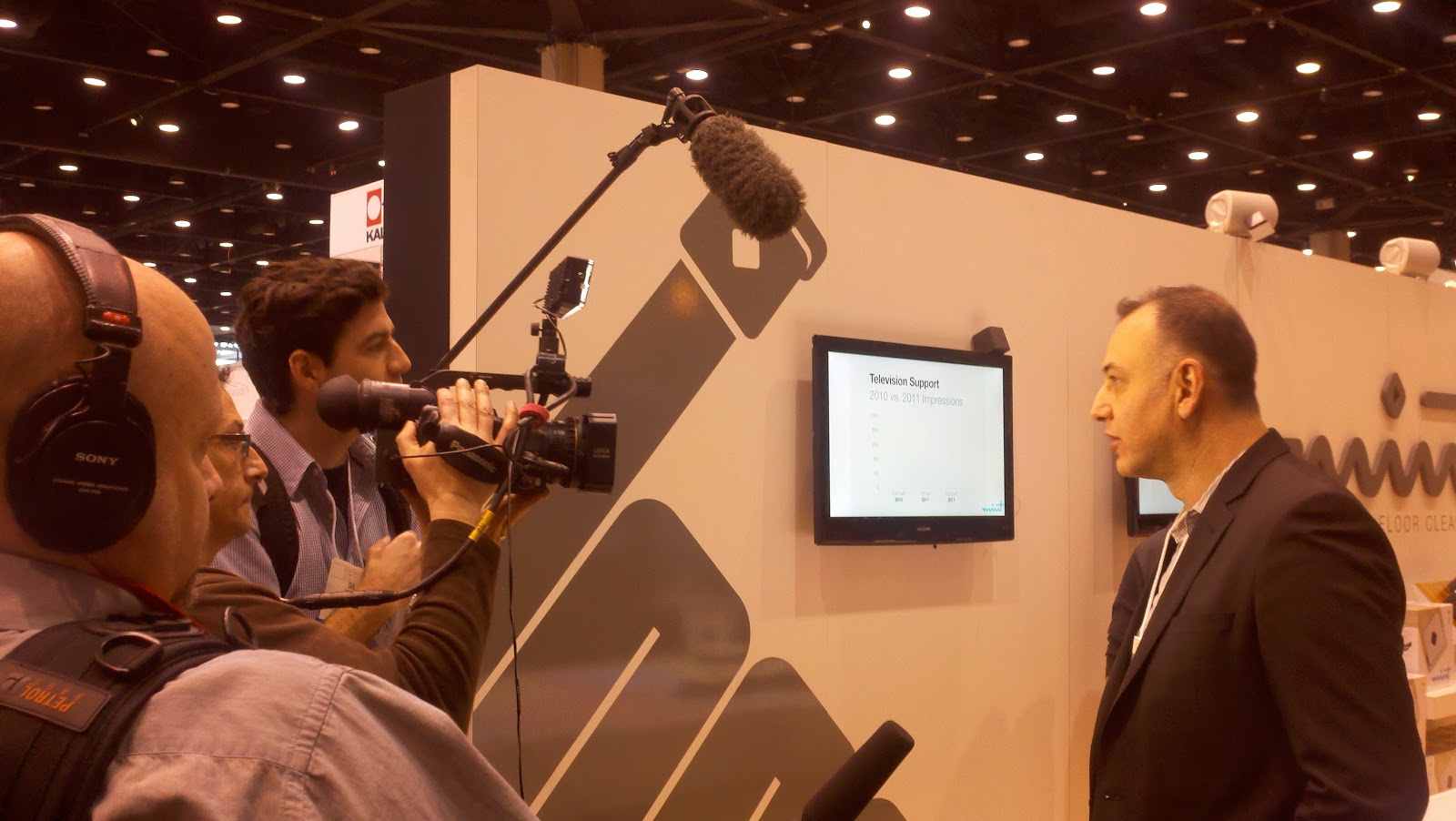
Today,
Foot Locker
finds itself in an enviable position. While the Seahawks didn’t come out on top
(
who calls a pass play on the 1 yard
line?!?!!?), Foot Locker employee
Chris
Matthews is giving the retailer the Cinderella story of all Cinderella
stories.
In February of 2014, Chris Matthews wasn’t an NFL player…he
was an employee at Foot Locker. He got the call to try out and was named to the
practice squad of the Seattle Seahawks. They didn’t make him an official member
of the roster until December 6, 2014.
Four short weeks later, he was on his way to becoming the
MVP of the Superbowl having an interception and touchdown to his credit. If
only the Seahawks didn’t fowl up that play…
So, Foot Locker could be the real winner here, if they take
advantage of this situation.
My first boss used to harp the phrase, “You’ve got to know
the news to be the news”, rightly insisting that we all study current events so
that we could
newsjack
appropriately.
This is that moment for Foot Locker.
What could they do? First off, sign Chris Matthews to a
spokesperson campaign.
Do it now: the key to newsjacking is immediacy.
Do a full nationwide TV assault with the man. New store
openings, social media out the wazoo, PR blitz.
You get the drift.
These opportunities don’t come around all that often. But,
we’ve seen a few examples this year, like with Jimmy Fallon decided he wanted to
buy a truck with some of his new Tonight Show funds. Though Ford and Chevy
participated,
Ram
stole the show, parking one right in
front of the studios.
We were fortunate enough to capitalize on a newsjacking
event ourselves, after first lady Michelle Obama worked with Dryel-spokesperson
(and CBS’ The Good Wife costume designer) Dan Lawson on her most recent
SOTU
wardrobe.
I’m anxious to see how Foot Locker runs with this ball. And,
if they need a quarterback to draw up a play? The team at MLMC is up for the
challenge.
Call us.
#BeTheNews
Media relations is the cornerstone of a PR campaign. A positive media placement gives instant credibility to a brand and instant cache to a product.
When you boil down the process, it looks a lot like sales pitch. You brainstorm a stellar idea that you know the media will bite on, build a media list, call the reporter, SELL, SELL, SELL and then see your idea come to life in print:
But, that's not the end of the story.
Let's talk about that red circle: Merchandising the Placement. The media placement itself will generate sales (studies show that media hits are 3x more effective than advertisements) and they're great for attracting a new audience.
Media placements are also great at reminding your existing customer base that, not only are you still there for them, but that the media embraces your product.
Here at MLMC, we post our clients' clips on LinkedIn, our own Facebook page and have been known to create a direct mail piece or two out of them. We're even in the process of revamping our blog and newsroom to better showcase these pieces.
How can you merchandise the clip? Here are a few ideas:
- Post it on your Facebook site, Twitter Feed and other social networks. If it's a print hit, take a picture of the article and post it on Instagram
- In the b-to-b world, it's a good practice to order reprints or generate your own and send a hard copy to your mailing list
- Use the clip in your e-newsletter to pump up an article.
That's exactly what
Arhaus did this morning with a placement from Elle Decor. And, it got my attention!
So, go call the media. Score a hit. And, then let's see what you do with it AFTERWARD.
It used to be everyone wanted Oprah. Then Ellen. Now Jimmy? A mere mention from one of these celebs can change a long-term sales trajectory. We've sold out CVS stores after Dr. Oz mentioned a product during his stint on Oprah; a partnership with Ellen drove an 11 percent sales spike with a laundry product. And, I'm dying to get Jimmy to talk about somebody!
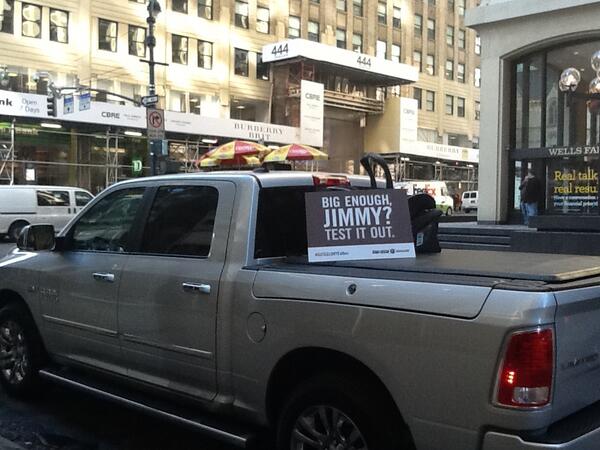
On one of his first shows, Jimmy decided he
wanted a truck. After mentioning it during his monologue several times, I was amazed, SHOCKED, that only one truck company parked one outside his set. No one else was paying attention. Good Job, Dodge! That was a PR opportunity begging to be seized, but most companies stopped short, only Tweeting the celebrity. Weak.
One of the first projects we ever did at MLMC was a scrapbook to get Oprah's attention for a company trying to woo visitors to Scotland. We painstakingly cut tartan fabric, applied glue to many a pictures and spent far too much time at Michael's. When we sent in our scrapbook, it did the trick and we got the attention of a producer who ended up using our client in a round-up of Women Entrepreneurs.
But, it took us weeks to complete that project. Imagine what fun we could have had with YouTube and Twitter!
Now, we have YouTube and the tourism folks in Citrus County put this
video together to woo Jimmy Fallon to make a 90-minute excursion when he visits Orlando. Hey, if it works for Rahm Emmanuel, it's gotta work for Citrus County, too, right?!
As we wait to see what kind of ROI chops Jimmy has, what kind of products do you see him endorsing?

In December, on a flight to Denver, I was perusing Delta Sky Magazine. The issue's main focus was on all-things Los Angeles. They also had a small focus on southern colleges.
I was pleasantly surprised to see a full page ad for my alma mater, Auburn University (War Eagle, hey!). And, it struck me with how spot-on this particular media buy was. You see, not only is Auburn in the South, but they were also on their way to play in the BCS National Championship in Pasadena, California. So, editorially-speaking, this issue was a two-fer!
That placement gave Auburn access to more than
5.2 million passengers, at an absurdly low CPM (for print) of $9.77.
In my personal experience, in-flight advertising works. We placed a story in an in-flight magazine for a franchise client. It was read by a passenger on her way to check out a *different* franchise. But, the story struck a chord with her and she began investigating our client. Six weeks later, she had abandoned her original plan and signed a franchise agreement with our client. ROI for that? 1600 percent.
So, if this is your target audience? You'd be smart to consider in-flight magazines a part of your media mix:
- Powerful demographic: $112,000 Median Household Income
- Educated: 86% are college educated and 27% have a post-graduate degree.
- Established: 51% are managers/professionals
If you don't want the photo to show up on the Internet, don't take the photo in the first place. We are beating that into teenage girls heads on a regular basis.
Shea Allen, a former reporter at a TV station in Huntsville, Ala., made a similar, albeit different, mistake.
Shea was fired after she posted on her
personal blog a top 10 list of "confessions" from her work as a TV reporter. These ranged from mild, "I'm better live when I'm not reading from a script" to the audacious, "I've gone bra-less on TV and no one noticed."
I highly doubt Shea was fired for those two, it's the bulk of the rest of the list that make her appear as someone who may take her job for granted. From sleeping in the news van (though I suspect that probably happens a lot, especially when you're covering a story all day) to refusing to interview "old people" and even admitting to literal smiling and nodding is a wee bit much from an employer-point-of-view. It's as if she's lost all job integrity.
Now, was her firing extreme? I know that I probably would have fired an employee for writing some of those things. I do know for certain that Shea Allen is more famous now than she would ever have been as a reporter in Huntsville, Ala.
When writing blog posts, whether here or on behalf of clients, there are a few important rules to follow:
- There is no such thing as privacy on the Internet.
- Obey the Golden Rule: do unto others as you'd have done to you.
- If it's not something you'd say to their face, don't say it online.
These are all logical, but perhaps we could all stand to hear them every once in a while.
I had a meeting this morning with a prospect. She said something that was spot on, "Public relations is becoming more public."
I think what she meant by that is that we're not just interacting with the media anymore. We're communicating directly with the consumer in many instances on Facebook, Twitter, Pinterest, etc. We're creating our own content but allowing consumers to participate, too.
When it comes to content, most outlets will talk about the Big 4, Earned, Owned, Paid and Shared:
Earned Content: This is the most basic form of traditional media relations. MLMC creates pitch. MLMC sends pitch to reporter. MLMC convinces reporter he loves the pitch. Story is generated.
Owned/Placed Content: This is content generated by MLMC or the client and can be used for bylined articles, op-ed pieces, blog posts or anywhere we can place content verbatim.
Paid Content: Put simply, these are ads or sponsorships. Many larger outlets (think Ellen, Better Homes & Gardens, etc.) now have income-generating editorial spots in place. To the general public, nothing seems out of place or different than the earned content.
Shared Content: Facebook, Twitter, Pinterest, Instagram, etc. Any site that works by encouraging interaction and participation directly with consumers results in shared content because it's a shared effort. Hint: Paid and Owned Media can inspire Shared Media. Shared Media can inspire Earned Media.
In reality, there's a 5th category. Call it Blended Content. Much of social media is moving to this “blended” concept: a mix of paid and earned content. Social media needs to be organic, yes, but sometimes this growth is more of a slow burn. We want results faster. So, we turn to sponsored content. Blended media is, in effect, paid content with earned content results.
PR plans work best when there's a combination of all at play. We've been outlining this content approach with our clients since 2009. Now that big agencies are jumping on board (see this New York Times article about recent changes at FleishmanHillard), we'll soon see a new crop of what Gini Dietrich calls "hybrid communicators." But, just like she says: if you submit your resume to us, you best already have a good understanding of how each of these works together.
pow·er/ˈpouər/
| Noun: |
| The ability to do something or act in a particular way, esp. as a faculty or quality. |
|
|
| Verb: |
| Supply (a device) with mechanical or electrical energy. |
|
|
| Synonyms: | noun. might - force - strength - potency - authority - energy verb. actuate - operate
|
Huey Lewis started it in 1985 with "The Power of Love". Then Celine Dion did her take on a song with the same title in 1993.
"The Power of..." is a key phrase that pops up in nearly every commercial break. From "That's the Power of the Home Depot" to "That's the power of Pine-Sol, baby" and now Volkswagen's "The Power of German Engineering", I'm left wondering if there are any new ideas or if the advertising industry is following in the footsteps of the movie industry in remaking everything.
I actually kinda understand the movie industry remakes. The movies they are re-doing hit right in the sweet spot of my generation (Hello, Dirty Dancing!) and I understand the draw to the word "power". It's, ahem, powerful. Palpable, even.
But I think it's overused and it doesn't show off the creative juices that I know run rampant in our industry.
As I started writing this blog post, I slapped myself: my own tagline is The Power of Pie.
Sigh.
File this under "Do as I say, not as I do" and then join me in brainstorming new taglines!
Republican or Democrat; Coke or Pepsi; Auburn or Alabama. We live in a world of opposing sides and the blogosphere is no exception: to pay or not to pay for product reviews.
Last night, I received an e-mail from BlogPaws, a network of pet bloggers whose annual conferences I've recommended to clients in the past. The e-mail and blog post can be read entirely
here, but here's the part that has me up in arms:
Some [pitches] will make you feel sad because they are about shelters, rescues or a program supporting shelters and rescues, and you want to write about them but... you can't write 10 different posts about 10 different things going on, and still get your own writing done. And, some will make you mad. Because they will assume you're going to cover their product for free... free product, that is. It's not the message, sometimes, it's the assumption that your time if not worth anything.
Here's the skinny on all of this.
Every time you do a free product review, you sell yourself, and your fellow bloggers short. Be selective. No, I am not advising you stop doing free product reviews. I am saying, weigh the free product and your influence carefully. Ask yourself, "Should I get paid for this review? Did the newspaper or major magazine in which an ad was placed for this product, do it for free? Why is my blog any different?" Truth is - your blog has more relevance than a major magazine or newspaper ad.
I do a fair share of social media marketing and consulting. At any given time, I'm running between 5 and 10 blog tours for various CPG companies. I recognize that product reviews on blogs are extremely important. The last statistic I can recall on the subject said that people who read about a product on a blog are 9x more likely to buy that product versus only 3x more likely if they read about it editorially (both metrics are compared to seeing an advertisement).
But to resonate with the consumer, that post needs to be objective.
And it's that reason that I do not advocate paying for content.
Why would a blogger do this? Simply put: content drives traffic. It's the same for traditional media and it works for blogs, too. My good friend Tim Wagner at
WrightIMC explains it nicely, saying "If you provide good content and do good search marketing, your audience will come. And, with that audience will come advertisers. PR people help you build good, unique content."
So, how can a blogger make money? I buy ad space on blogs on a daily basis. I've sponsored bloggers to attend conferences and other events. I've even been known to pay for an advertorial (or two).
As Jeremy Pepper says, You need the traffic to command and demand a cost structure.
I'm going out on a limb here and I'm sure I'll make some enemies by saying this: It boggles my mind that some bloggers can't see the forest for the trees. They have a money-making mechanism at their disposal. But, it's not in the content. It's in the advertising.
I've sent this link to BlogPaws, fellow bloggers and several people I respect in the PR world for comment.
 |
| Blogger relations is a lot like Alice's ventures! |
A few weeks ago,
Entreprenette Sarah Shaw called and asked if I would share some tips with her readers on working with bloggers. We did a short call (details
here) and then had a follow-up conversation.
We do a lot of blog tours at MLMC (so many, in fact, that I co-founded the
Blogger Black Book, an opt-in directory of bloggers who want to talk to marketers, but I digress...)
There was a phrase Sarah kept mentioning: Going into the rabbit hole. This is exactly what it's like to find new bloggers.
The number one question clients ask me about working with bloggers is how to find the *right* one. The answer is fairly simple:
the right blogger for your company or product mirrors your target buyer.
You'll need to do research on the Internet (google your target audience and the word "blog" in quotations) and that's when you'll find yourself in the rabbit hole. Even after years of doing these tours, I still get sucked in. Reading a blog is like visiting another world. It's like finding someone's diary and stepping in their shoes for an afternoon. It's fantasy but real. Click on one blog and that leads to another and then another and before I know it, an entire hour is gone!
After you find your first blogger, look around on that blogger's site. You'll often find he or she belongs to a network (or several). Contact those networks for future reviewers--aim for working with 10-15 at a time so you don't get overwhelmed. You'll find that bloggers lead to other bloggers.
In that case, it's more like a trail of breadcrumbs. But that's a whole other fairytale!
~ml
Ask most public relations professionals what their least favorite part of PR is and the answer is usually the same: follow-up calls. There is a legitimate reason for the distaste most feel for the follow-up call and it is pretty straightforward: Reporters hate them.
Now I know what you are thinking: “If reporters hate them, then why do them?” It’s simple, really. Reporters are human beings. It may be true that most of the time the reason the reporter never responded to your pitch is because they were just not interested. But, and this is a really big BUT, sometimes they are genuinely happy you called because they: a) never got your email; b) accidentally deleted your e-mail; c) got distracted by some other news bit; d) forgot.
The point is that reporters are very busy people. Our job as public relations professionals is to help reporters. I know reporters don’t always see it that way, but it truly is one of our main priorities. And in case you have forgotten why it’s important to be helpful to reporters, it’s because they remember it. Next time they are looking for a story idea they might just come asking you because they know you are easy to work with.
Another reason it is important to make follow-up calls is because it provides an opportunity for some personal communication. In today’s world, e-mail is the preferred means of communication, and because we are all busy people, it’s understandable. However, taking the time for the occasional conversation is not unwise. It reminds us why we got into this business in the first place: we like people, and we like communicating!
So, while the chances are fairly good that your follow-up calls may annoy or be ignored, there are those occasions where a reporter is glad you called. And those occasions almost ALWAYS lead to an article!! Well worth the effort, I’d say.
And remember, that article is much more valuable than an equivalent ad buy, because of the third party objectivity.
You can’t put a price on that!
It seems like a no-brainer. A social media outlet with more than 800 million active users seems like the perfect place for advertising, marketing, and pushing your latest product, but it’s important to remember that Facebook is largely a personal social media outlet. Too much pimping and pushing and you will see your Facebook fans quickly disappearing.
However, public relations is a whole other ballgame. Now, I don’t mean the stalking game that PR tends to become when you are trying to get media coverage for your product or service. While media relations is a crucial part of every public relations campaign, it is not direct communication with your public. Facebook provides a unique opportunity for companies because it allows them direct contact with their customers without any middleman. If we are really talking about the true art of “relating to your public,” then Facebook is a perfect venue.
But, “relating” without annoying is tricky.
Think about it: Depending on your product or service, you must have something going for you if you were able to get people to “like” your company’s Facebook page in the first place. What is it? Is it a really high-quality product? Was it exceptional customer service experiences? Did you offer an opportunity to win a trip to Cancun for every person who liked your page? Whatever it was, it worked. Now you have to keep them, and to do that, you need to offer relevant information or opportunities to your public.
And I’m not talking about announcing that you just changed the color of the label on your product, or that your CEO was recently given some obscure award. Nobody cares. Really. They don’t.
Here are a few examples of relevant information that your fans might like to hear about:
- Upcoming contests or sweepstakes your company is offering (everyone likes to win things!)
- Recent recalls associated with your product (your fans will appreciate you being more concerned with their safety than your image)
- Anything GREEN! The people of the world are turning more Earth-conscious, and if your product is trying to help save the planet, people want to know.
- Preservatives and chemicals are so 5-minutes-ago. Is your product becoming healthier in some aspect (all natural, whole wheat, no sugar added)? People want to know.
- The Human Fund! Is your company hosting a 5K fundraiser? Are a portion of your proceeds going to help charities? Is there something easy your customers can do (like saying something at the register when they check out) to get funds donated to their child’s school? People want to help others – especially when it requires little effort on their part (sad, but true). If so, let them know.
These are just a few examples, but you get the idea. Relevant information that may affect their lives – that’s what your customers are interested in. Using Facebook to communicate that information to show you care, not only about your customers, but the world in general, is true public relations. That’s a relationship most people would appreciate.
Recently, I was having a debate with a colleague about the power of media relations. Every PR consultant can spew the statistics (editorial coverage positively impacts the purchase decision cycle by nearly 300 percent; positive blog reviews do the same by nearly 900 percent, etc). But, it doesn't impact the sales cycle by itself.
Ask yourself this? You've got the clip. Now what do you do with it? Merchandising the clip after it posts is what will ensure the above statistics work for your company.
I ran across an interesting article on Hubspot today, written by Anum Hussain entitled
4 Content Creation Lessons Marketers Can Learn from Journalists.
The opening paragraph brought me back to that debate:
Because content creation is core to inbound marketing, part of being a marketer now means being some form of a journalist. Therefore, to find success in inbound marketing, marketers must now master the art of marketalism.
Marketing + Journalism = Marketalism.
Marketalism [mar-keht-uh-liz-em] noun, verb:
1. the merge between the rudiments of traditional journalism and using content for marketing
2. to create content that is relevant and timely for professionals in a specified industry
Hussain goes on to explain four lessons to take from journalists: frequency, research, beat organization and audience needs.
The comments also add some additional lessons, like how to adhere to a deadline. Sadly, promotion is not one of the lessons.
Here are my tips for promoting a media hit after it posts.
At minimum, do these three things.
- Post the URL to your online newsroom. Don't have an online newsroom? Get one. And include somebody's actual contact information, not just a form.
- Send the link to all of your fans and followers on Facebook and Twitter.
- Post the clip to your intranet
Want to go above and beyond? Include the news item in your customer newsletter. And, my favorite: Order reprints and arm your sales force with them for better customer presentations.
How do you merchandise your media hits?
I think the answer to the above question is an emphatic yes.
So, imagine my suprise when I read an article in the latest issue of Real Simple Magazine, "
Five work rules you should break". According to the article, the second rule made to be broken is Climb the Career Ladder.
First some background: Real Simple is almost like a Life Handbook for me. I have dog-eared copies going back to the very first issue that was published. I'm a working mom and nearly every article resonates with me. Also, I'm a media relations
guru consultant, and I recommend pitching Real Simple to nearly all of my consumer clients. A hit in the magazine is a sure way to drive awareness.
The author quotes Michelle Goodman, the author of the
Anti 9-5 Guide. Michelle is also a career columnist for ABCNews.com. Here's the answer verbatim:
There’s pressure in our culture to earn more money and to have important titles. But not everyone wants more responsibility and power. And what we don’t hear often enough is that it’s OK not to want a promotion. So move laterally, or choose self-employment if you think that will make you happy. It won’t hold you back; on the contrary, having a nonlinear career path can make you more intriguing to bosses in the future, not less. They’ll view you as having broader experience.
I saw the "choose self-employment" line and nearly choked.
If you don't want more responsibility, self-employment is not the right fit for you. As CEO of this tiny agency, I do everything from make the coffee to prospecting to billing. Not to mention the work, managing the employees, etc.
I'd love to hear feedback from other self-employed entrepreneurs out there. Call it a gut check!
Even though she's a Gator (ugh), I'm pleased to announce Shannon Herbon as MLMC's newest director of media relations. Shannon's fearless when it comes to working with the media and we've already seen an uptick in placements since she joined us a few weeks ago.
Please join me in welcoming Shannon to the MLMC team. Oh, and War Eagle :)
MLMC announces Director of Media Relations
TAMPA, Fla. (June 10, 2011) – MLMC, a marketing communications and public relations agency based in Tampa, Fla., announced Shannon Herbon as its new director of media relations on Friday, June 10. As director, Herbon will develop and implement the company’s overall strategic media relations programs and maintain relationships, while dispensing newsworthy information to the media.
“I am looking forward to joining such a dynamic and results-driven team,” said Herbon. “As director, I will be aiding in the extraordinary exchange of ideas between our clients and the media, while providing knowledgeable and strategic guidance.”
Herbon has more than 12 years of progressive experience managing and implementing public relations and marketing strategies, resulting in millions of dollars of publicity and profit for her clients. With a variety of experience in communications, public relations, graphic design and marketing, Herbon has worked with institutions such as Metropolitan Ministries, a homeless shelter in the Tampa Bay area; the People's Princess Charitable Foundation, a global tour of the royal gowns once owned by the late Diana, Princess of Wales; Brock Communications, a full service public relations and marketing firm based in Tampa, Florida; and the Tampa Bay Performing Arts Center, frequently ranked as one of the top 10 performing arts venues in the world.
A graduate of the University of Florida, she received her Bachelor of Science in Public Relations with a concentration on Business Administration. She resides in Wesley Chapel, Florida with her husband Andy and their two children, Ainsley and Max.
About MLMC
MLMC is a communications firm with deep roots in trade and general media relations and specialties in social media, event marketing and corporate communications. Founder Megan Licursi and her team have crafted and executed results-driven campaigns for a wide range of clients, from business-to-business stalwarts like AK Steel, CONTECH Construction Products and National City to consumer powers such as Dryel, Downy, Fazoli's and the funky with Evolution Robotics and Haunted Attraction Magazine.
# # #
The new president of MTV, Stephen Friedman, was AdWeek's
First Mover last week. During the simple Q&A, Mr. Friedman provided a glipmse into MTV's firm placehold among America's Millennials.
One comment that stood out for me was Friedman's position on social media. "
Social media is the telephone and our content is the conversation. I think it’s as simple as that. We need to be everywhere they are." Friedman goes on to tout MTV's surge in Facebook fans over the last few years, rising from 5 to 68 million fans.
With 27,000,000 pieces of content posted through social media venues (according to a recent AOL/Nielsen study), it's only a matter of time before that telephone call will result in a busy signal.
It's clear that some clutter-cutting methods need to be designed to ensure the messages are reaching their audiences.
The best way to cut through the clutter is to be an engaged participant. It's not a one-way street and the quickest way to turn a customer off is to talk AT them rather than WITH them.
This is something that Friedman agrees with: "
It’s not just about putting marketing messages out. It’s making sure our talent is talking and engaging, that our staff is talking and engaging. That two-way dialogue creates a sense of cultural home."
Media relations pros are kinda like photographers: we're very rarely in front of the cameras. So, I was tickled pink to be included in this article about the
Oprah Effect.
I've been fortunate to have three clients appear in the last few years on Oprah. I'm truly going to miss the thrill of the hunt. But, confession: I'm not going to miss the prospective clients whose first question is inevitably, "Can you get me on Oprah?".
Now, I'm off to pitch OWN...and try to ID the next Oprah (I think it's Ellen!)
Peter Shankman once again caused a ruckus with his latest post on
Social Media Experts. In a nutshell, Peter says that he would never hire someone who claims to be a "social media expert" comparing that person to a bread-taker-outer.
 |
I actually bought this shirt for a good friend.
Hi, Serena! |
An interesting anaology, certainly.
I agree--and disagree--with Peter, hence this blog post.
When I'm looking to make a hire, either for MLMC or one of our clients, I always want a well-rounded individual. Much like I look for cross-industry experience, I look for candidates who have dabbled in a variety of tactics, be it media relations or social media.
I, myself, started in the b-to-b world and would never have imagined that my current client roster would be comprised of so many CPG companies. But, without the b-to-b stuff, I wouldn't be the same media relations gal.
In other words, the right marketing candidate is an expert in all things marketing, not just social media. To that end, Peter's point is solid:
companies do themselves a disservice when they hire in silos.
So, do I want a social media expert? Yes. Will that be their sole responsibility? Heck no. We're all hands-on here :)
Yesterday was the opening day of the
International Home & Housewares Show. We have two clients here,
Evolution Robotics and
The oneCARE Company.
We had a very successful media day with The Rachel Ray Show and New York Times stopping by the Mint Booth and WGN and a few more came by oneCARE's booth at N6109.
 |
The Rachel Ray Show stopped by The Mint Cleaner booth
to see the Mint's dancing. |
 |
oneCARE's President demonstrating a new product
for the cameras |
Now we're looking forward to day two!
A Forbes reporter is working on a story about women at work. Specifically, she's writing about what tips the scales to make an "assertive woman" into a Bitch.
There it is. The B Word. In all its glory.
My gut reaction upon seeing this query was along the lines of a bumper sticker I once saw, "I'm a Bitch And Proud of it." But, my second thought was an exasperated sigh. Why are we
still having this conversation?
Is it because we lead a double life in the workplace? We use our feminine wiles when it's useful--and it *is* useful (which to any woman who's ever been to a b-to-b tradeshow can testify). We can use our emotions to our advantage (though I'm still learning how not to take things personally).
It's neither of these points, though, that tip the scale from assertion to bitch-dom. We become bitches when we throw our business sense to the wayside. When we take a my-way-or-the-highway approach. When we're not open to outside ideas.
But that's not a trait that's unique to women. I just wish I could think of the male-equivalent to the B-Word.
I had a phone conversation with a colleague of mine who's making the switch from brand manager to PR director. Instead of tracking which shelves her product is sold on, she's going to be directing people to those shelves. She asked me to share with her some tips on how to get national media coverage for her products.
The first question I asked was if her products had national distribution, the one black and white criteria necessary to get national attention. When her answer was yes, I moved on.
Media relations is all about...the relations. It's knowing who's covering what. So, with that:
Tip #1: Read/Follow/Interact with outlets you're pursuing.
I will always hear an old boss' words echoing in my ears, "You've got to know the news to be the news." That's about the only think I took from him, but that's for another post ;)
Tip #2: Get in with the freelancers
Freelancers, in my opinion, make the media world go round. Whereas a relationswhip with an editor housed at the magazine might end up in a one-time hit, the right relationship with a freelancer could result in opportunities with multiple outlets.
Tip #3: Operate a season ahead
Long lead magazines like Better Homes & Gardens, Good Housekeeping, Real Simple, etc. operate on a 3-month lead time (or more). So, be pitch your story ideas well in advance. A client of mine has a new product line coming out in May. We started pitching this week.
Tip #4: Be patient.
It will take some time to see the result of your efforts. The blog posts below show hits on Good Morning America and Ellen. We started those pitches in May of 2010. Nearly 8 months ago.
Feel free to contact me with any questions you might have. I'm happy to give my two cents :)