Today,
Foot Locker
finds itself in an enviable position. While the Seahawks didn’t come out on top
(
who calls a pass play on the 1 yard
line?!?!!?), Foot Locker employee
Chris
Matthews is giving the retailer the Cinderella story of all Cinderella
stories.
In February of 2014, Chris Matthews wasn’t an NFL player…he
was an employee at Foot Locker. He got the call to try out and was named to the
practice squad of the Seattle Seahawks. They didn’t make him an official member
of the roster until December 6, 2014.
Four short weeks later, he was on his way to becoming the
MVP of the Superbowl having an interception and touchdown to his credit. If
only the Seahawks didn’t fowl up that play…
So, Foot Locker could be the real winner here, if they take
advantage of this situation.
My first boss used to harp the phrase, “You’ve got to know
the news to be the news”, rightly insisting that we all study current events so
that we could
newsjack
appropriately.
This is that moment for Foot Locker.
What could they do? First off, sign Chris Matthews to a
spokesperson campaign.
Do it now: the key to newsjacking is immediacy.
Do a full nationwide TV assault with the man. New store
openings, social media out the wazoo, PR blitz.
You get the drift.
These opportunities don’t come around all that often. But,
we’ve seen a few examples this year, like with Jimmy Fallon decided he wanted to
buy a truck with some of his new Tonight Show funds. Though Ford and Chevy
participated,
Ram
stole the show, parking one right in
front of the studios.
We were fortunate enough to capitalize on a newsjacking
event ourselves, after first lady Michelle Obama worked with Dryel-spokesperson
(and CBS’ The Good Wife costume designer) Dan Lawson on her most recent
SOTU
wardrobe.
I’m anxious to see how Foot Locker runs with this ball. And,
if they need a quarterback to draw up a play? The team at MLMC is up for the
challenge.
Call us.
#BeTheNews
Media relations is the cornerstone of a PR campaign. A positive media placement gives instant credibility to a brand and instant cache to a product.
When you boil down the process, it looks a lot like sales pitch. You brainstorm a stellar idea that you know the media will bite on, build a media list, call the reporter, SELL, SELL, SELL and then see your idea come to life in print:
But, that's not the end of the story.
Let's talk about that red circle: Merchandising the Placement. The media placement itself will generate sales (studies show that media hits are 3x more effective than advertisements) and they're great for attracting a new audience.
Media placements are also great at reminding your existing customer base that, not only are you still there for them, but that the media embraces your product.
Here at MLMC, we post our clients' clips on LinkedIn, our own Facebook page and have been known to create a direct mail piece or two out of them. We're even in the process of revamping our blog and newsroom to better showcase these pieces.
How can you merchandise the clip? Here are a few ideas:
- Post it on your Facebook site, Twitter Feed and other social networks. If it's a print hit, take a picture of the article and post it on Instagram
- In the b-to-b world, it's a good practice to order reprints or generate your own and send a hard copy to your mailing list
- Use the clip in your e-newsletter to pump up an article.
That's exactly what
Arhaus did this morning with a placement from Elle Decor. And, it got my attention!
So, go call the media. Score a hit. And, then let's see what you do with it AFTERWARD.
It used to be everyone wanted Oprah. Then Ellen. Now Jimmy? A mere mention from one of these celebs can change a long-term sales trajectory. We've sold out CVS stores after Dr. Oz mentioned a product during his stint on Oprah; a partnership with Ellen drove an 11 percent sales spike with a laundry product. And, I'm dying to get Jimmy to talk about somebody!
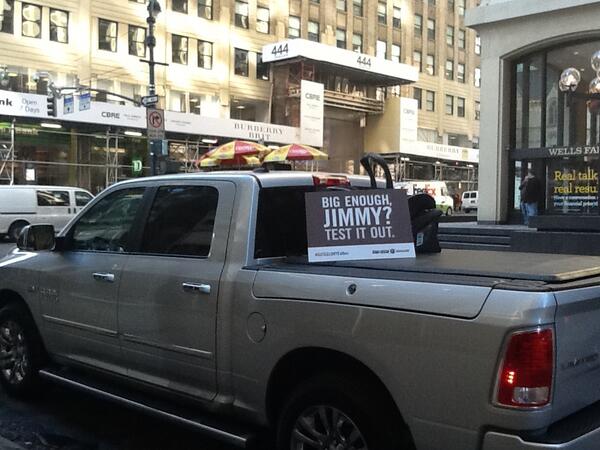
On one of his first shows, Jimmy decided he
wanted a truck. After mentioning it during his monologue several times, I was amazed, SHOCKED, that only one truck company parked one outside his set. No one else was paying attention. Good Job, Dodge! That was a PR opportunity begging to be seized, but most companies stopped short, only Tweeting the celebrity. Weak.
One of the first projects we ever did at MLMC was a scrapbook to get Oprah's attention for a company trying to woo visitors to Scotland. We painstakingly cut tartan fabric, applied glue to many a pictures and spent far too much time at Michael's. When we sent in our scrapbook, it did the trick and we got the attention of a producer who ended up using our client in a round-up of Women Entrepreneurs.
But, it took us weeks to complete that project. Imagine what fun we could have had with YouTube and Twitter!
Now, we have YouTube and the tourism folks in Citrus County put this
video together to woo Jimmy Fallon to make a 90-minute excursion when he visits Orlando. Hey, if it works for Rahm Emmanuel, it's gotta work for Citrus County, too, right?!
As we wait to see what kind of ROI chops Jimmy has, what kind of products do you see him endorsing?